
Wichita's Surveillance Expansion: What Five Years of City Council Minutes Reveal About Flock Safety Cameras
Part one of an ongoing investigation into Flock Safety cameras, secret deployment maps, and five years of unanswered questions at Wichita City Hall.

Editor’s note: This piece is based exclusively on a review of city council meeting minutes and agendas obtained through a Kansas Open Records Act (KORA) request. The underlying contracts, amendments, and procurement documents have not yet been reviewed and will be the subject of a follow-up report. The goal here is to establish the broader context: how Flock came to be implemented in Wichita, how it has been discussed in public forums over five years, and what questions remain unanswered before the contract language itself is examined.
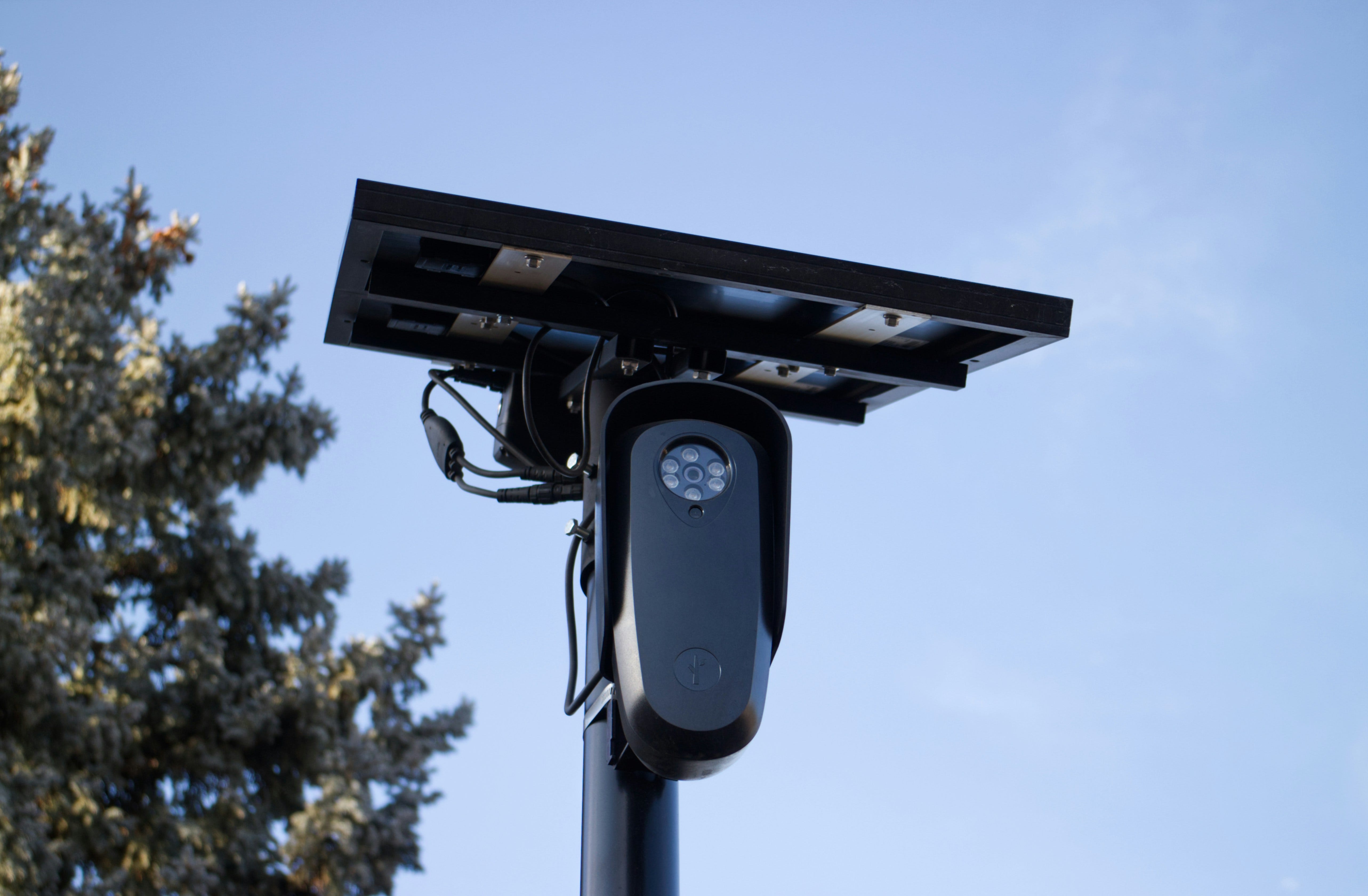
Over the past five years, the City of Wichita has quietly built one of the most extensive automated license plate reader networks in Kansas, and possibly the only one of its scale in the state. The cameras are made by Flock Safety, an Atlanta-based surveillance technology company. They are solar-powered, mounted on city infrastructure, and according to public testimony at city council meetings, number somewhere above 195 as of early 2026. The exact count is unknown, even to the council members who approved them. The locations are secret. As of today, March 31, 2026, a major federal grant that helped fund the program’s technology infrastructure may have just expired, with no public announcement of what comes next.
This is what five years of city council meeting minutes reveal about how we got here.
How It Started: A Quiet Pilot During COVID
The Wichita Police Department entered into a no-cost pilot agreement with Flock Group, Inc. on November 5, 2020, during the height of COVID lockdowns, when public meeting attendance was limited and civic scrutiny was reduced. The pilot ran for approximately 90 days. When it came before the city council for formal contract approval on April 6, 2021, Lieutenant Casey Slaughter of WPD presented the item. No member of the public appeared to comment.
At that meeting, Slaughter outlined what the system does: cameras photograph the rear of passing vehicles, extract license plate digits, and compare them against a “hot list” drawn primarily from the National Crime Information Center (NCIC). Officers can also manually flag vehicles tied to active investigations. Every search requires a documented law enforcement purpose, either a case number or a crime location, and the system logs every keystroke indefinitely. Data is automatically purged after 30 days.
The council voted 7-0 to approve the contract.
What wasn’t discussed at that meeting: any independent audit of Flock’s data practices, any public input process, any civil liberties policy, or any plan for what happens when the funding runs out. Council Member Tuttle asked whether success metrics would be defined before the program was institutionalized. Lieutenant Slaughter acknowledged the need. City Manager Robert Layton committed to using the pilot baseline to establish formal measures. No such metrics appear to have ever been brought back to the council in any subsequent meeting reviewed.
Expansion Without Transparency
Over the next several years, the program expanded steadily and largely without public debate. By July 2023, residents were beginning to notice.
That month, a Wichita resident named Mark Barlow made the first of several appearances before the city council to raise concerns about the program. He disclosed that he had submitted a KORA request for a deployment map of the cameras and been denied. In response, he had built his own map. He alleged that two rounds of cameras had been installed during the COVID lockdown period, that the cameras were deliberately concealed within utility infrastructure, and that Flock was accumulating more than a million data points in Wichita per day.
Council Member Johnson pressed Barlow on his central claim: that Flock was selling citizens’ data to third parties. Barlow acknowledged he did not have documentary proof, only that the contractual language he had reviewed permitted other agencies to request data be moved to their own servers, where it could be retained indefinitely. No council member directly addressed that contractual claim. It would not receive any contractual response until June 2024, when the city quietly approved an amendment to the Flock agreement as a consent agenda item, with no public discussion, adding language specifying that “Flock does not own and shall not sell Agency Data.”
The fact that this amendment was necessary at all is notable. It implies that the original 2021 contract did not contain such a prohibition.
Barlow returned to the council in January 2024 and again in March 2024, each time with more detailed arguments. By his March 2024 appearance, he was connecting Flock to a national data-sharing network called Talon, alleging that more than 500 police departments across 1,000 cities have access to Flock data, and claiming Sedgwick County is the only county in Kansas participating. He also alleged that what WPD describes as a vehicle-only camera system actually captures images of individuals, animals, and bicyclists. The council’s response across all three appearances followed a consistent pattern: firsthand anecdotes of crimes solved, references to the Flock transparency portal, and reassurances that WPD’s policy prevents misuse. The contractual and structural questions Barlow raised were never directly engaged.
The Federal Funding Question
In November 2023, the city council approved two separate federal grants, a BJA National Public Safety Partnership grant and a COPS Technology and Equipment Program grant, explicitly for the purpose of developing a Real-Time Crime Center (RTCC) that would integrate Flock camera data with other surveillance feeds. At the time, Deputy Chief Duff confirmed that WPD conducts 30-day audits of Flock usage and that the federal grant came with oversight requirements from the Department of Justice’s Office of Civil Rights.
This brings us to today.
According to federal USAspending records, Grant #15JCOPS22GG01497TECP, a $1.6 million Department of Justice award described as supporting technology and community policing, has a performance period end date of March 31, 2026. That is today.
Questions the City of Wichita has not publicly answered:
Does WPD have a secured budget line to cover the ongoing annual operating costs of the Flock camera network after this grant expires?
If not, will cameras be deactivated, reduced in number, or allowed to lapse?
Why has a surveillance program of this scale and cost not been brought before the public for a transparent funding discussion prior to the grant’s expiration?
These questions are made more urgent by the defeat of Proposition 1 on March 3, 2026, a ballot measure that would have authorized public safety capital improvements and could have provided an alternative funding pathway. With that option gone, the city has not publicly announced a contingency plan.
The March 10, 2026 city council meeting, the most recent in the record reviewed, featured public comment from two residents raising surveillance concerns, but the Flock program’s funding status was not on the agenda and was not discussed by council members.
Transparency on Their Terms
Across multiple council meetings, WPD representatives described the Flock program as self-auditing: officers log their own searches, supervisors review those logs internally, and the department reports compliance to itself. When Vice Mayor Hoheisel asked in November 2023 whether the Department of Justice would conduct independent audits under the federal grant, the answer was uncertain. When he raised the same question in October 2024, Captain Moses said he didn't know and would follow up. No follow-up appears in any subsequent meeting record.
One of WPD's own administrators has since put a finer point on it. When asked at a June 2024 public town hall whether Wichita scrutinizes each individual Flock search, Lt. Brian Safris was direct: "That's not even possible." The system logs every search. Nobody is reading them.
The audit mechanism itself has also been quietly dismantled. As recently as June 2025, Flock's CEO stated that search reasons are "preserved permanently in the audit trail." In December 2025, the company unilaterally stripped officer names, specific plates searched, and search filter details from the logs it provides to agencies — without consent. The stated justification was officer safety. The timing was harder to explain: the changes came weeks after a third-party watchdog site began publishing audit records that exposed misuse patterns.
What remains is aggregate data, and aggregate data is not oversight. The transparency portal shows totals — 3,012 searches in the last 30 days, 862,029 vehicles detected — but not why any search was conducted, by whom, or whether it was justified. Nationally, "investigation" is the single most common search reason logged in Flock systems, a one-word entry that satisfies the technical requirement while revealing nothing about purpose. Wauwatosa, Wisconsin's police department ran nearly 1,900 searches over six months under that sole justification. Milwaukee PD logged it over 1,000 times in 2025 alone. As the ACLU of Wisconsin has noted, a portal showing how many searches were run tells you nothing about whether those searches were legitimate. It is a press release, not a safeguard.
The two Sedgwick County misuse cases confirm what happens in that gap. The Kechi lieutenant's searches were logged under reasons including "test," "invest," "123abv," and "****" — none of which triggered an audit flag. The Sedgwick police chief's misuse was discovered only because he admitted to it during an unrelated misconduct investigation. Flock told the Wichita Eagle it was not formally notified of the Sedgwick incident, and declined to say how many instances of officer abuse have occurred nationally.
The partner agency list on Wichita's transparency portal raises a separate and harder question. Among the organizations with access to Wichita's Flock data are MOCIC — a federally-affiliated multi-state organized crime intelligence network — the Texas Financial Crimes Intelligence Center, the Kansas Bureau of Investigation, and the Kansas Highway Patrol. The 2024 contract amendment prohibits Flock from selling agency data. It says nothing about what happens when a listed partner with legitimate access shares that data further up the chain.
Experience elsewhere makes clear the problem is architectural, not administrative. Woodburn, Oregon's transparency page stated that data was owned by the police department and could not be shared with third parties. Its own audit revealed DHS and Border Patrol accessed it 384 times anyway. Oxnard, California restricted access to California agencies only — and a vendor-side software feature enabled a nationwide query function the city didn't know existed. Oxnard suspended all Flock cameras in February 2026 pending a security review. That same month, a class action lawsuit was filed in San Francisco Superior Court accusing Flock of sharing data with ICE, CBP, FBI, and ATF in violation of California's ALPR Privacy Act. San Francisco PD cameras alone were queried by out-of-state agencies over 1.6 million times in seven months. The contract language Wichita holds is not meaningfully different from the contracts those cities held. Paper protections do not override software architecture.
The federal government has, to date, been the primary funder of this infrastructure — through grants whose performance period ends today. It does not require cynicism to ask whether that investment was purely philanthropic, or whether the partner access list reflects relationships that were always part of the design. One of WPD's own lieutenants has already told you what their self-oversight assurance is worth.
What Comes Next
This review of meeting minutes is only the beginning. The actual contracts, amendments, procurement records, and cost documentation that would allow independent verification of the figures and claims made in council chambers over five years have not yet been reviewed. That work is ongoing.
In the meantime, two additional efforts are underway.
A new KORA request has been submitted to the Metropolitan Area Building and Construction Department (MABCD) seeking all permit applications, right-of-way encroachment permits, structural engineering reviews, and interagency correspondence related to Flock camera installations on public infrastructure from January 1, 2020 to the present. Because Flock cameras are mounted on traffic signal poles, streetlight poles, and other city-owned infrastructure, permit records may provide the most reliable independent count of how many devices actually exist and where they are. WPD has refused to disclose this information, and even council members have been unable to pin down an exact number. It is worth noting that under City of Wichita Traffic Signalization Specifications (Part 700), modifications to traffic signal infrastructure require written approval from the Engineer prior to acceptance. Whether that approval was sought, granted, or documented for Flock installations is an open question.
Additionally, a coalition of Wichita residents concerned about surveillance expansion is forming. The group will be nonpartisan and focused specifically on surveillance accountability in Wichita and the surrounding area. Planned efforts include a public petition, a contact form for those interested in getting involved, and a trained volunteer base for door-to-door outreach and community literature distribution. More details will be published as the coalition takes shape.
Questions for the City of Wichita
Five years of public record, a federal grant expiring today, and a transparency portal quietly restored without announcement leave the following questions unanswered:
The transparency portal lists 191 LPR cameras as of March 30, 2026. How many of those are city-owned versus privately owned, and how many additional privately owned cameras are integrated into the WPD network without appearing in that count?
The federal grant that has supported this program’s technology infrastructure expires today. What budget line covers the ongoing annual operating cost of the Flock network beginning April 1, 2026? If no funding has been secured, will cameras be deactivated?
The portal’s access policy states that all system access logs are stored indefinitely. WPD has repeatedly told the public and the city council that data is deleted after 30 days. These are not contradictory statements, but the distinction has never been disclosed or explained publicly. What exactly is retained indefinitely, and who has access to those logs?
The portal lists over 100 organizations with access to Wichita’s Flock data, including MOCIC, the Texas Financial Crimes Intelligence Center, the Kansas Bureau of Investigation, and the Kansas Highway Patrol. Has any of those partner agencies ever requested that Wichita data be transferred to their own servers? Has any data been retained beyond the 30-day standard as a result of such a request?
Cities including Woodburn, Oregon and Oxnard, California held contractual protections substantively identical to Wichita’s and still had their data accessed by federal agencies without authorization. What technical controls — not contractual language — does WPD have in place to prevent unauthorized federal access to Wichita residents’ data?
Were proper permits, right-of-way encroachment approvals, and structural engineering reviews obtained for all Flock camera installations on city-owned infrastructure, including traffic signal poles and streetlight poles, as required under City of Wichita Traffic Signalization Specifications Part 700?
Lt. Brian Safris stated publicly in June 2024 that scrutinizing each individual Flock search is “not even possible.” What is the actual audit process, how frequently are audits conducted, and have any officers been disciplined for Flock misuse since the Kechi incident in 2022?
In December 2025, Flock unilaterally removed officer names, specific plates searched, and search filter details from the audit logs it provides to agencies — without agency consent. Was WPD notified before this change was made? Did the city consent to it? Does WPD consider this a material change to the terms under which the program was approved?
Captain Casey Slaughter presented the Flock contract to the city council in April 2021 and provided the access control assurances on which the council based its approval. He later lobbied the Kansas Legislature, as president of the Kansas Fraternal Order of Police, to keep camera locations secret. Does WPD consider that a conflict of interest? Who currently holds accountability for the representations made to the council at that 2021 meeting?
The transparency portal states that the Flock system does not detect people, gender, or race. In October 2025, a resident told the city council — citing direct observation and Flock's own marketing materials — that the cameras capture images of individuals as well as vehicles. Has WPD independently verified what the cameras are capable of capturing, and is the portal's "What's Not Detected" disclosure accurate?