
I'm a Law-Abiding Citizen. Why Should I Care About Flock?

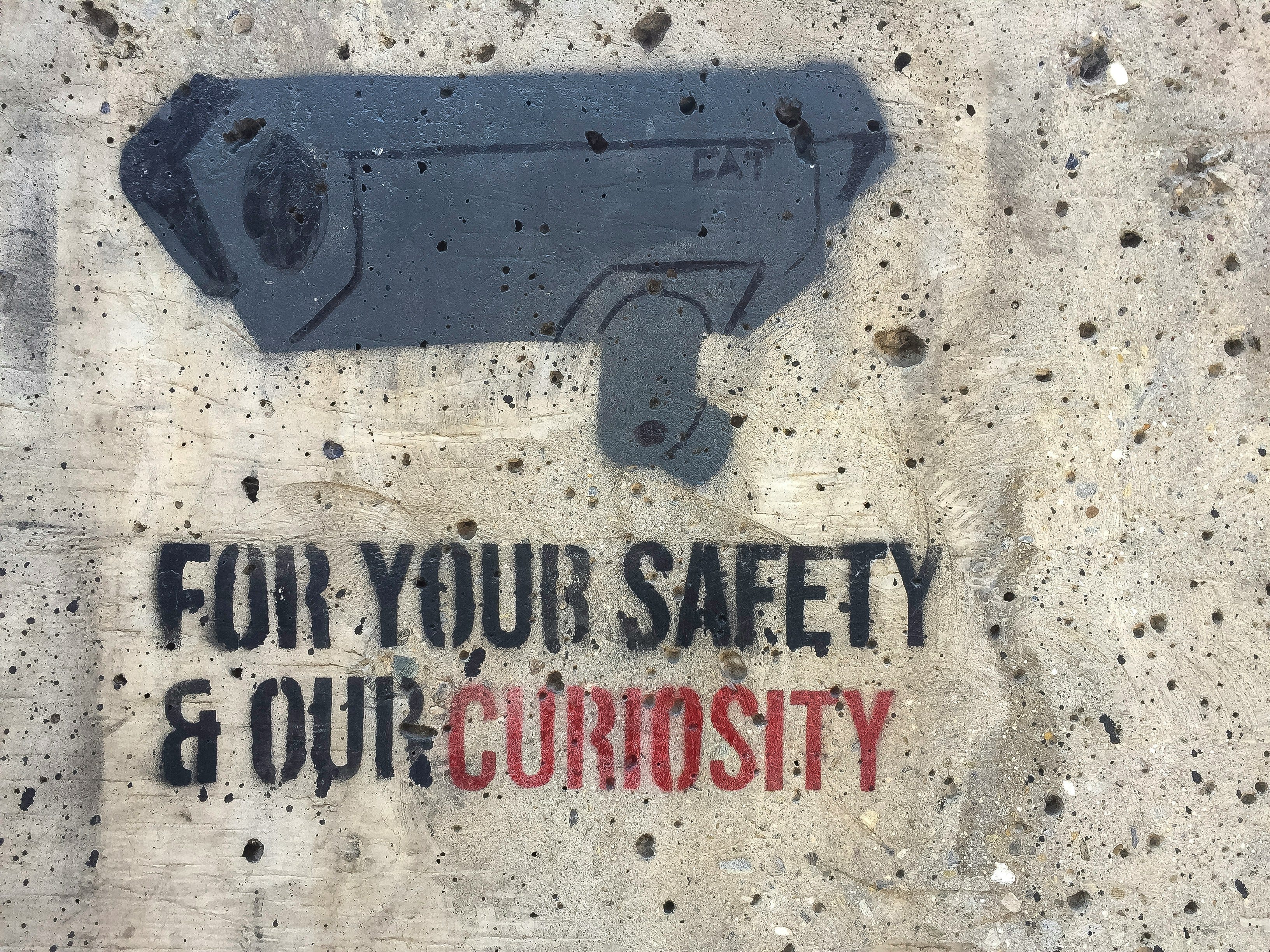
Let me tell you a little about myself.
I’m a Catholic. A husband. A father. A homeowner. I work full-time as a data engineer, and on the side I co-founded a software company. I pay my taxes, and I don’t have a criminal record. Being a libertarian, I’m definitely sympathetic to the FTP and ACAB mindset, though I won’t go quite so far as embracing the “Defund the Police” mantra. (That’s an article for my other Substack.) I live next door to a State Trooper, and I try to be respectful in my interactions with him and all the law-enforcement officers I occasionally interact with. By any reasonable definition, I am a law-abiding citizen.
And I think Wichita’s deployment of (at least) 310 Flock Safety automated license plate reader (ALPR) cameras is one of the more alarming things this city has done in recent memory.
If that surprises you, keep reading.
This Isn’t a Left-Wing Issue. It Isn’t a Right-Wing Issue.
Before I go any further, let me tell you about the people standing alongside me on this one.
The person who first pushed me to take this project seriously and has been on the ground documenting the location of these cameras is a right-leaning Christian small business owner. The most vocal supporter I’ve heard from is an 84-year-old citizen activist who has been fighting battles like this one longer than I’ve been alive — a man with deep roots in Americans for Prosperity and the Pachyderm Club, which bills itself as “an official affiliated club of the Republican Party.” I’ve also received support from the academic dean of a local university.
I myself am a libertarian who runs in predominantly conservative circles.
And yet when I posted about this on r/wichita — a forum that skews heavily to the left — the response was overwhelmingly supportive.
That tells you something. When you can get an 84-year-old Republican activist, a libertarian data engineer, a university dean, a Christian small business owner, and a bunch of left-leaning Redditors to agree on something, you might want to pay attention to what they’re agreeing on.
“What’s the Problem With Them?”
Reddit user JustMeAndMyStuff asked exactly that: “And the problem with them is?”
Fair question. Let me answer it seriously.
First: there has been virtually zero transparency. The city of Wichita deployed (at least) 310 cameras across the metro area and the public has been asked, essentially, to trust that this will be used responsibly. I’ve submitted a public records request (KORA request #26-1385) seeking the full contract, payment records, data retention terms, and the City Council authorization. The fact that I have to submit a formal records request to find out basic information about a surveillance network blanketing my city tells you a lot about how this rollout was handled.
Second: there is a documented history of abuse. This isn’t theoretical. A former Kansas police chief was decertified for misusing surveillance equipment to target his ex-girlfriend.1 In Wichita itself, there have already been concerns raised about how this technology is being applied.2 These aren’t edge cases — they’re a preview of what happens when you hand powerful surveillance tools to fallible human beings without meaningful oversight.
Third: who’s in power won’t always be who you want in power. This is the argument I want you to sit with longest.
The Question You Should Be Asking Yourself
Reddit user AndShock put it plainly:
“I’m not sure if these are already being used to find illegal immigrants but if they aren’t then I’m sure they will be soon. Also not going to be too long before these are used for things like tracking women traveling for abortions. Big Brother is here.”
You might agree with that use case. You might not. But here’s the thing — your preferences aren’t permanent. Governments change. Administrations change. Priorities change. The surveillance infrastructure, however, stays.
For every right-winger who pushed back against COVID lockdowns and stay-at-home orders: what happens the next time a government at any level tries to impose movement restrictions? If 310 cameras can track you from the moment you leave your driveway to the moment you arrive at your destination, that’s not a hypothetical threat. That’s a capability that exists right now, waiting to be used by whoever happens to be in charge when the next crisis — real or manufactured — comes along. Just the other night I drove from my home in Northwest Wichita to Wichita Brewing Company in Delano. While the nearest flock camera to my home is the one just north of 37th on Maize Road, I noticed two between the Kellogg & Seneca exit and my WBC: one just north of Kellogg and Seneca on the stoplight pole and another freestanding camera just south of Douglas and Seneca.
Reddit user CabbagesStrikeBack said it as well as anyone:
“What’s law abiding today can change tomorrow and then they use this against you.”
And fullstar2020 added:
“No we do [care]. Because at some point someone’s going to use this information against law abiding citizens.”
“If You Have Nothing to Hide...”
There’s always someone ready to say this. On r/wichita, it was ProfRaptor:
“Law Abiding Citizens don’t care. You all need to do some research on what the Flock cameras do. They take still images, not video. They are not monitored. They send an alert when a vehicle, or tag, is reported stolen. If you are really worried about being recorded and losing your privacy, stay in your mothers basement. When anyone leaves their home, they are almost always on some camera somewhere.”
I want to engage with this seriously, because it represents a genuine point of view.
Yes, we are on cameras constantly in public life. Businesses have cameras. Doorbells have cameras. People wear cameras on their faces. That’s true.
But there is a meaningful difference between passive, fragmented, privately-operated cameras and a unified, government-operated network of 310+ readers specifically designed to log, timestamp, and store the movement of every vehicle that passes through the city. The former produces disconnected snapshots. The latter produces a movement history — a record of where you were, when, and how often.
I work in data and AI. I can tell you from professional experience: this kind of longitudinal data is extraordinarily powerful, and it doesn’t take much to turn it into something invasive. You don’t need video. You don’t need a human monitoring a screen. With modern data infrastructure and AI assistance, a movement history can reveal your medical appointments, your religious practices, your political associations, your relationships, and your routines — with a high degree of confidence and very little manual effort.
As Maxzillian put it:
“I don’t think a privately operated company (Flock) should be allowed to have this much oversight on the population. It’s just a matter of time before the data they collect is used to further enshittify our lives.”
That’s not paranoia. That’s pattern recognition.
So Is It Even Working?
Reddit user Spikedbullet99 raised an inconvenient question:
“These are everywhere but cars get stolen and never found everyday. I would like to know how these are helping us because I don’t think it’s helping. I think it’s just big brother.”
And FaceRidden had a concrete experience to back that up:
“Truck was stolen in downtown Wichita. Had to recover it ourselves. What are the cameras for?”
These are legitimate questions. If the city is going to deploy 310+ cameras — spending significant public funds, collecting data on every Wichitan who drives — the burden of proof should be on the city to demonstrate that it’s working. Not anecdotally. With data. Publicly available data.
We don’t have that. And we should demand it.
Kentonh added another dimension worth considering:
“Wasteful government spending. The 4th Amendment of the United States Constitution. Do you hate America and love spending tax dollars?”
Overstated? Maybe. Wrong? Not entirely. The Fourth Amendment’s protection against unreasonable searches doesn’t evaporate because the surveillance happens to be automated. Courts are still working through what that means in the era of mass data collection — and the Carpenter v. United States decision from the Supreme Court already signaled that long-term location tracking can constitute a Fourth Amendment search requiring a warrant. An ALPR network of this scale raises exactly those questions.
The Opt-Out Problem
We all know our cell phones track us. That’s become an accepted part of modern life. But — and this matters — we chose to carry our phones. We agreed (however imperfectly) to terms of service. We can leave our phones at home.
You cannot opt out of Flock. If you drive in Wichita, you are being logged. There is no consent mechanism. There is no appeal. There is no way to say “I’d rather not.”
That asymmetry is worth taking seriously, regardless of your politics.
What I’m Asking
I’m not asking you to become a libertarian. I’m not asking you to distrust law enforcement wholesale. I’m not even asking you to oppose the cameras entirely (though I do).
I’m asking you to demand answers:
What did this cost, and who authorized it?
What are the data retention policies, and who has access?
What oversight mechanisms exist to prevent abuse?
Is there any evidence it’s actually reducing crime?
These are not radical questions. They are the basic questions any engaged citizen should be asking about any government program — especially one that involves the mass collection of data on every person who drives through their city.
I’ve submitted my records request. I’ll keep you posted on what comes back — or doesn’t.
In the meantime, if you’d like to help document the location of these cameras in Wichita and the surrounding area, reach out. This is a community project, and it benefits from community eyes.
Kansas Watch is a civic accountability publication covering local government in Kansas. If you found this useful, consider subscribing or sharing it with someone who should read it.
Footnotes
Former police chief decertified for misusing equipment to target ex-girlfriend — Harvey County Now
Wichita Eagle coverage of Flock Safety deployment — The Wichita Eagle